



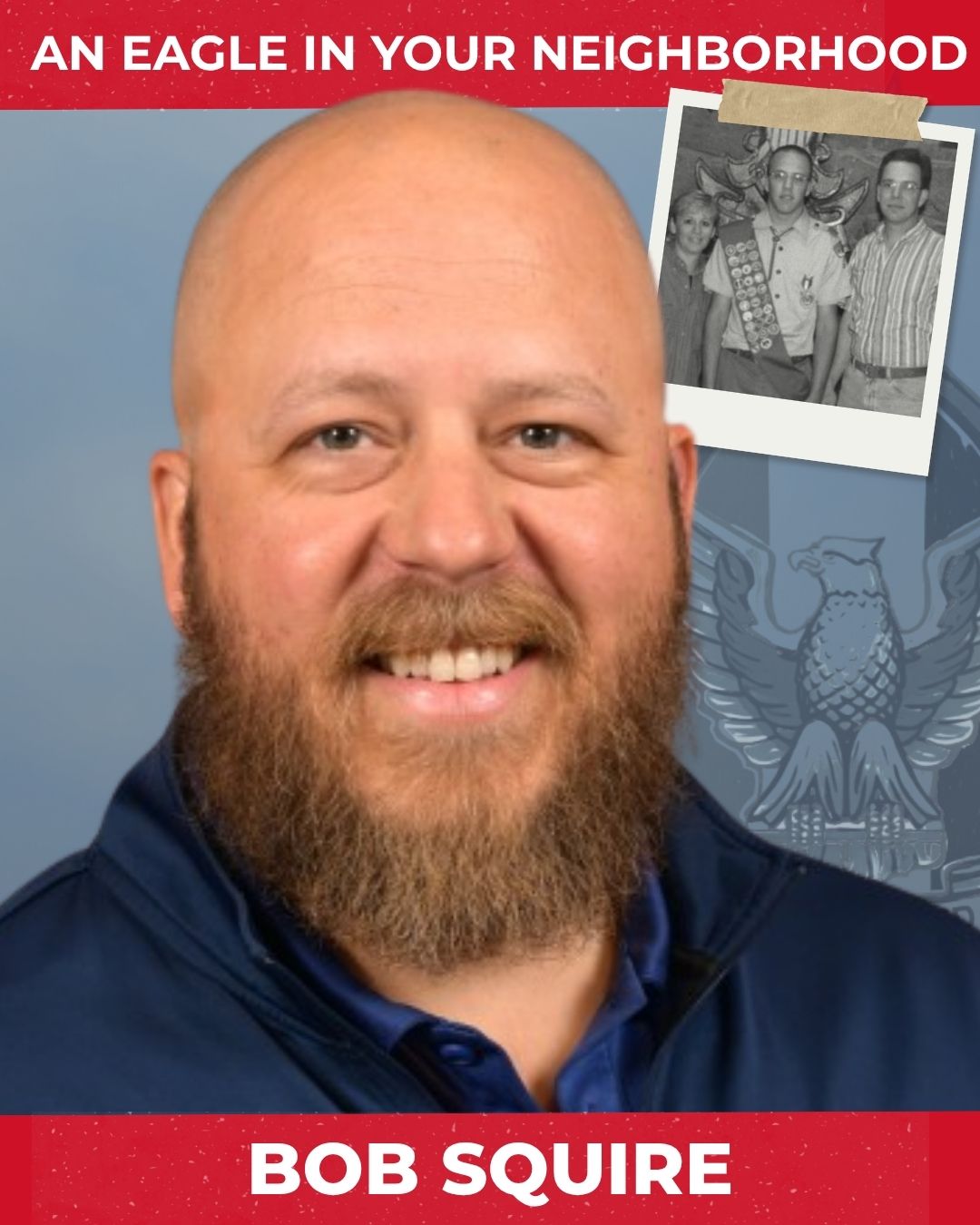
Central New York is well known for its wildlife, from soaring bald eagles to a wide variety of songbirds and waterfowl. But since 2021, thanks to Eagle Scout Bob Squire, SUNY Upstate Medical University Hospital’s Advanced Air Mobility Technology Innovator is another kind of presence that has taken to the skies – mechanical drones transporting lab samples, medical equipment, and urgently needed medications across the Syracuse skyline.
This cutting-edge delivery system had its beginnings in 2019 as the brainchild of SUNY Upstate CEO Bob Corona. At the time, the hospital’s horizontal layout meant that transporting medications or supplies from one end of the hospital to the other could take 15 to 20 minutes per trip. Squire, then a Unix administrator, volunteered to explore whether autonomous robots could perform these tasks more efficiently. The timing proved ideal. When COVID-19 struck a year later, the hospital was forced to stop using volunteers for these deliveries. The robotic solution not only maintained operations but also reduced staff members’ exposure to COVID-19 by eliminating the need to enter high-risk areas.
Following the success of the autonomous robot program, Squire and the Upstate robotics team began exploring whether drones could be used to transport supplies between the hospital’s various Syracuse campuses and locations. This would help mitigate traffic and other delays, including the disruptions caused by the current Interstate 81 relocation project. Although still in its early stages, the drone delivery initiative has already shown tremendous promise, positioning SUNY Upstate at the forefront of this emerging technology.
Squire credits much of his success to the foresight and support of SUNY Upstate’s leadership, as well as the skills he developed through Scouting. An Eagle Scout who earned his rank in 2000 with Troop 9 in Ilion, Squire sees strong parallels between Scouting and his professional work. “As a Scout, every campout or trip required an organizational plan, clear communication with multiple stakeholders, and careful route planning,” he said. “Those are the same steps I have to follow when scheduling a drone flight.”
Those skills extend beyond technology. Squire is a volunteer with the Onondaga County Wilderness Search and Rescue team and previously served as its Deputy Coordinator. “The outdoor and orientation skills I learned as a Scout translated directly into that role,” he noted, “and those are the same skills I use in my role with SUNY Upstate.”
Scouting is deeply rooted in Squire’s family. His grandfather and uncle were Eagle Scouts, and his father narrowly missed the rank due to a late-added merit badge requirement. Despite that, Scouting remained a family priority. “In our family, Scouting was almost non-negotiable,” Squire said. “My two younger brothers and I all earned our Eagle rank.”
Today, a fourth generation of Squires is benefiting from the program. Squire’s two sons are active in Scouts BSA, and his daughter is a Cub Scout. Although the program has evolved since his youth, Squire believes its core value remains unchanged. “Scouting is still the best youth program available,” he said.
Beyond practical skills, Squire values the experiences and lasting friendships that Scouting provides. He recalls earning his Eagle alongside four others in his troop and still sharing memories with them 25 years later. One moment in particular reaffirmed his faith in the program: bringing his four-year-old son on a cold, wet overnight Cub Scout campout with his older brother. Despite initial doubts, the experience became a highlight for the child and confirmed for Squire that Scouting would eventually be a lifelong passion for his four-year-old son and for his entire family.